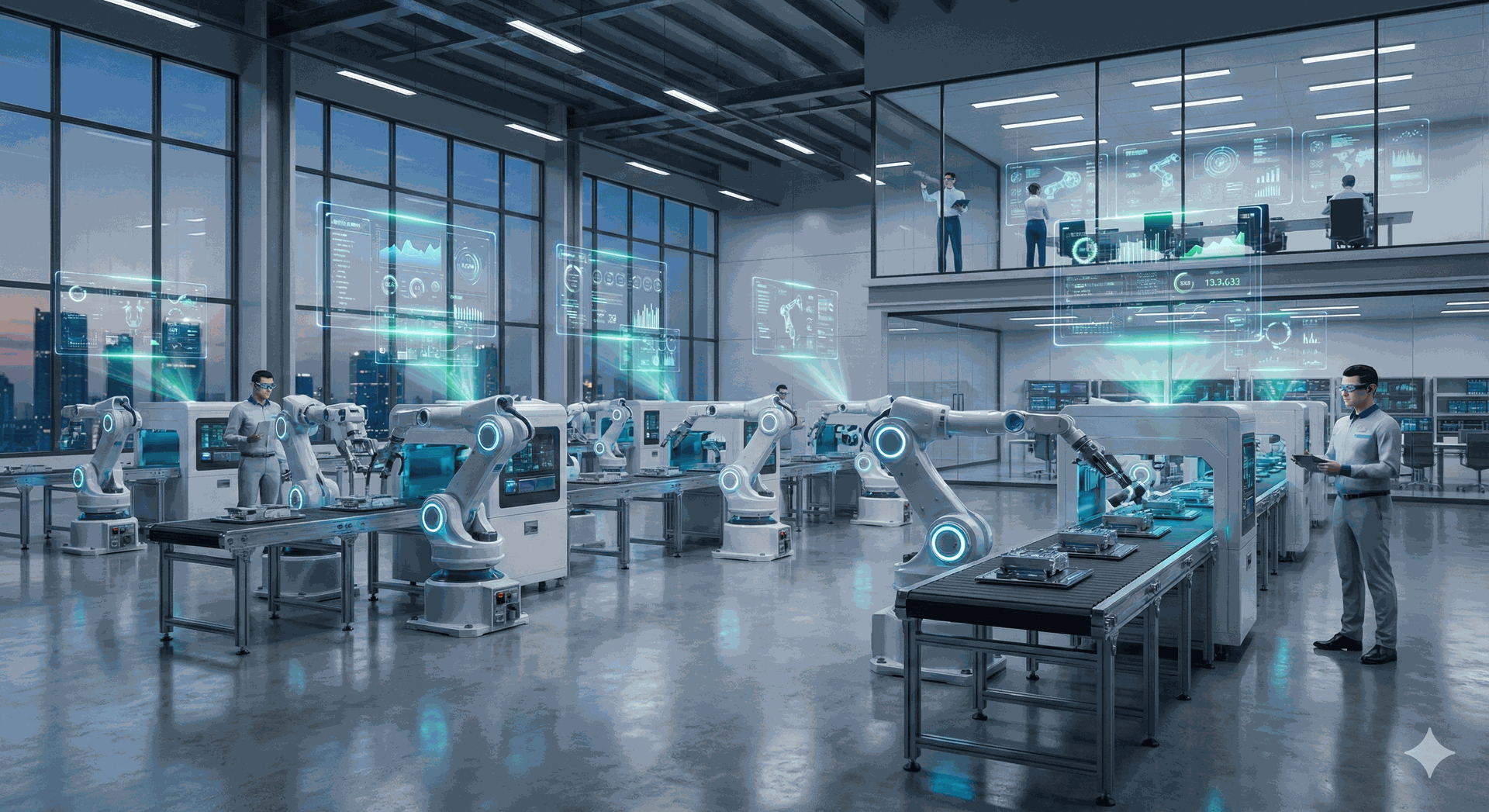
If you look at the manufacturing floor of just a decade ago and compare it to today, the difference is stark. We aren’t just talking about newer machines or faster conveyor belts; we are witnessing a fundamental shift in how things are made, managed, and delivered. This is the era of Industry 4.0, and it is being driven by digital transformation.
For manufacturers, staying competitive is no longer just about who has the lowest labor costs or the largest factory. It is about who can leverage data, automate complex processes, and integrate intelligent Manufacturing ERP Solutions to create a leaner, smarter operation. From the Internet of Things (IoT) to advanced data analytics, technology is rewriting the rules of the game.
In this post, we will explore how digital transformation is reshaping the manufacturing landscape from equipment production to packaging and why an integrated approach is the key to surviving and thriving in this new industrial revolution.
The Driving Forces of Industrial Digitalization
Digital transformation isn't a single switch you flip; it’s a ecosystem of technologies working in harmony. At the heart of this shift is the need for visibility and agility. Modern manufacturers face fluctuating demand, complex supply chains, and increasing pressure for customization.
To meet these challenges, the industry is turning to a few core technologies:
- Artificial Intelligence (AI) & Big Data: For analyzing massive datasets to predict trends and optimize workflows.
- Internet of Things (IoT): Connecting physical machines to the digital world to monitor performance in real-time.
- Cloud Computing: Allowing for remote access to data and scalable resources.
- Robotics: Moving beyond simple assembly to complex, autonomous tasks.
These technologies don't just "speed things up" they fundamentally change how value is created, shifting the focus from mass production to smart, flexible production.
Equipment Manufacturing: The Power of Automation and IoT
One of the sectors seeing the most immediate impact is equipment manufacturing. Here, precision and uptime are everything.
1. The End of Routine Automation is often feared as a job replacement, but in reality, it is a "drudgery replacement." By automating routine, repetitive tasks, manufacturers are freeing up their human workforce to focus on quality control, strategy, and complex problem-solving. This doesn't just improve morale; it significantly reduces human error. When a machine handles the repetitive, boring stuff, production becomes faster, safer, and more consistent.
2. IoT and Predictive Maintenance Imagine if your machines could tell you they were about to break before it happened. With IoT, this is now standard practice. Sensors embedded in manufacturing equipment continuously collect data on vibration, temperature, and output.
Instead of waiting for a breakdown to halt production (costing thousands in downtime), the system predicts the failure and schedules maintenance during planned lulls. This shift from "reactive" to "predictive" maintenance is increasing efficiency by over 80% for many forward-thinking companies.
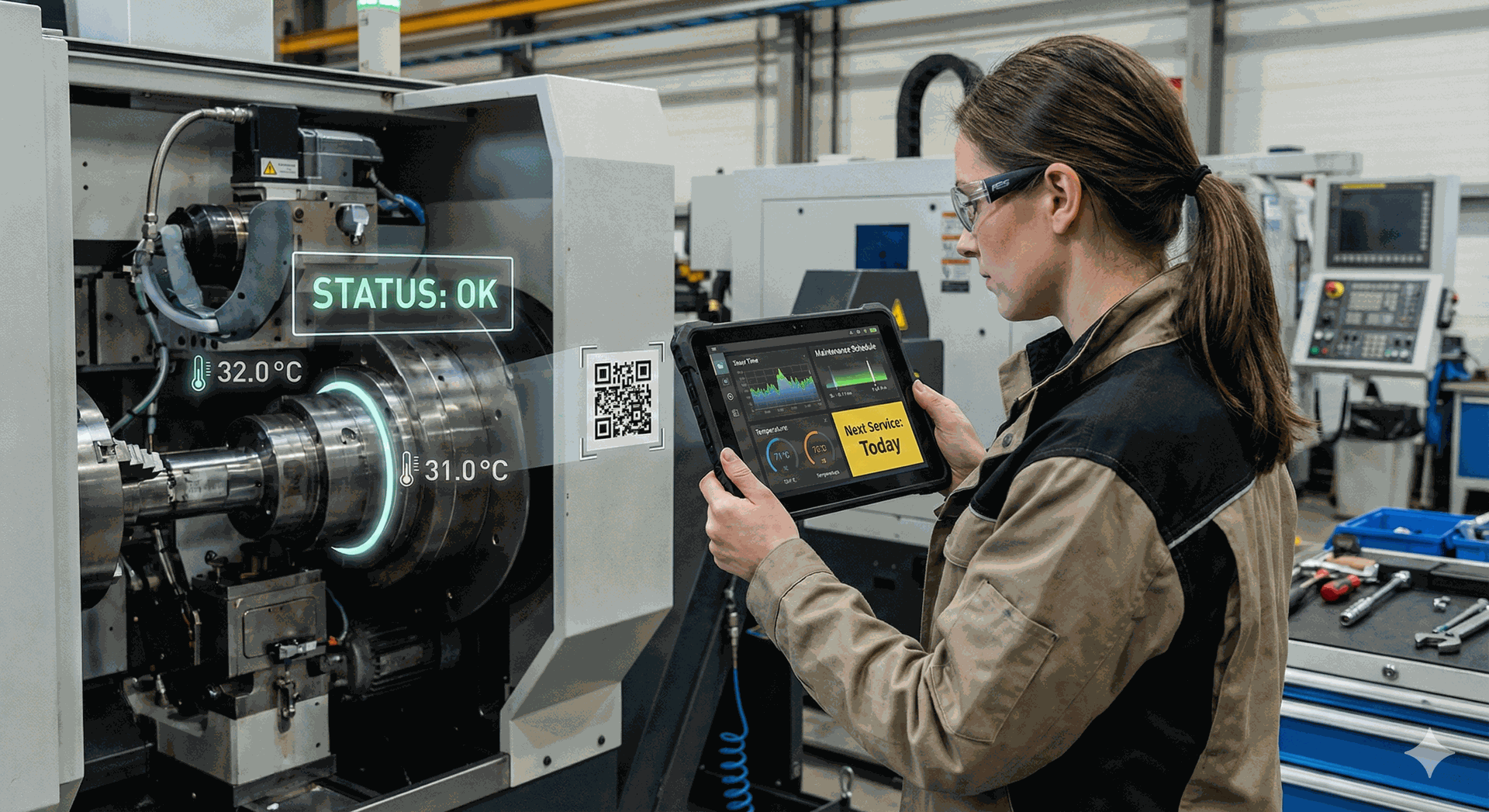
3. Smarter Quality Control IoT also revolutionizes quality assurance. High-resolution cameras and sensors connected to cloud platforms can inspect products on the line faster than the human eye. They catch defects instantly, preventing bad batches from ever leaving the floor and protecting the company's reputation.
Furniture & Home Goods: Customization at Scale
The furniture industry is notoriously competitive. Today's consumer wants bespoke designs, fast delivery, and perfect quality. How do manufacturers keep up? Through customization technologies.
Augmented and Virtual Reality (AR/VR) It starts with the customer experience. AR and VR allow clients to visualize how a piece of furniture will look in their own home before it’s even built. But beyond marketing, these tools help manufacturers visualize production changes without physical prototyping, saving time and materials.
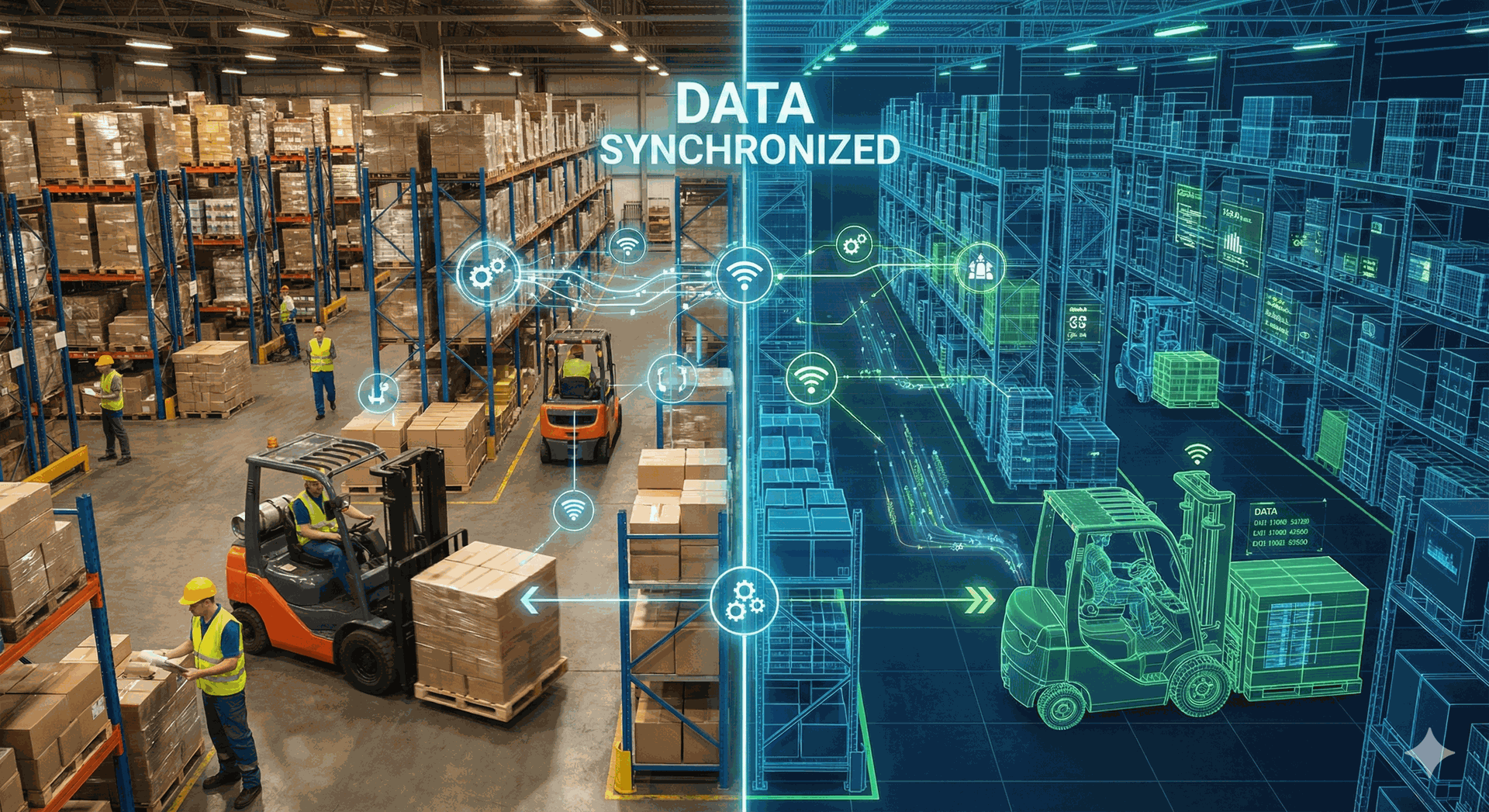
The Rise of Digital Twins Perhaps the most exciting development is the concept of the "Digital Twin." This is a virtual replica of the entire manufacturing facility. Manufacturers can run simulations on the twin to test new workflows, rearrange the floor layout, or introduce new product lines—all without stopping the actual production line. It allows for risk-free experimentation, identifying bottlenecks and inefficiencies in a virtual environment before implementing solutions in the real world.
Packaging Manufacturing: Sustainability Meets Efficiency
Packaging is often the unsung hero of the supply chain, but it is currently undergoing a massive green revolution powered by digital tech.
Supporting the Circular Economy Sustainability is top of mind for modern consumers. Digital platforms allow manufacturers to track the lifecycle of their packaging materials, facilitating recycling and reuse programs. By tracking scrap flows and managing sustainable materials more effectively, companies can reduce waste and appeal to the 66% of consumers who avoid brands for environmental reasons.
Smart Inventory Management In the fast-paced world of packaging, knowing exactly what materials you have on hand is critical. This is where Supply Chain Management ERP capabilities become essential. These systems provide real-time visibility into inventory across multiple warehouses, preventing overstocking (which ties up cash) and stockouts (which stop production), ensuring a smooth flow of raw materials.
The Backbone of Transformation: The ERP System
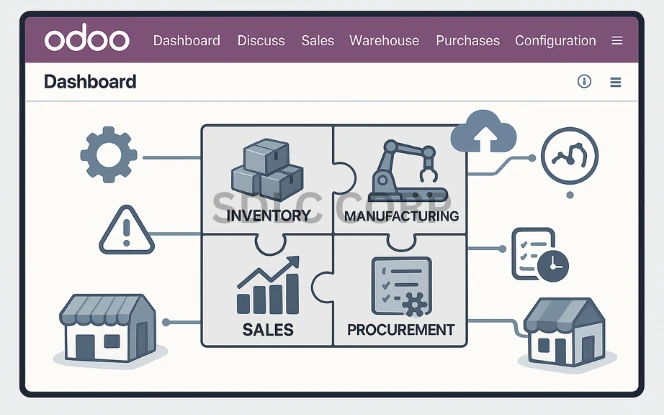
We have talked about robots, sensors, and AI, but how do you make them all talk to each other? This is where the Enterprise Resource Planning (ERP) system comes in. It is the central nervous system of the modern factory.
Without a unified ERP, your sales team doesn't know what production is doing, and procurement doesn't know what inventory is missing. This leads to silos, data duplication, and costly errors.
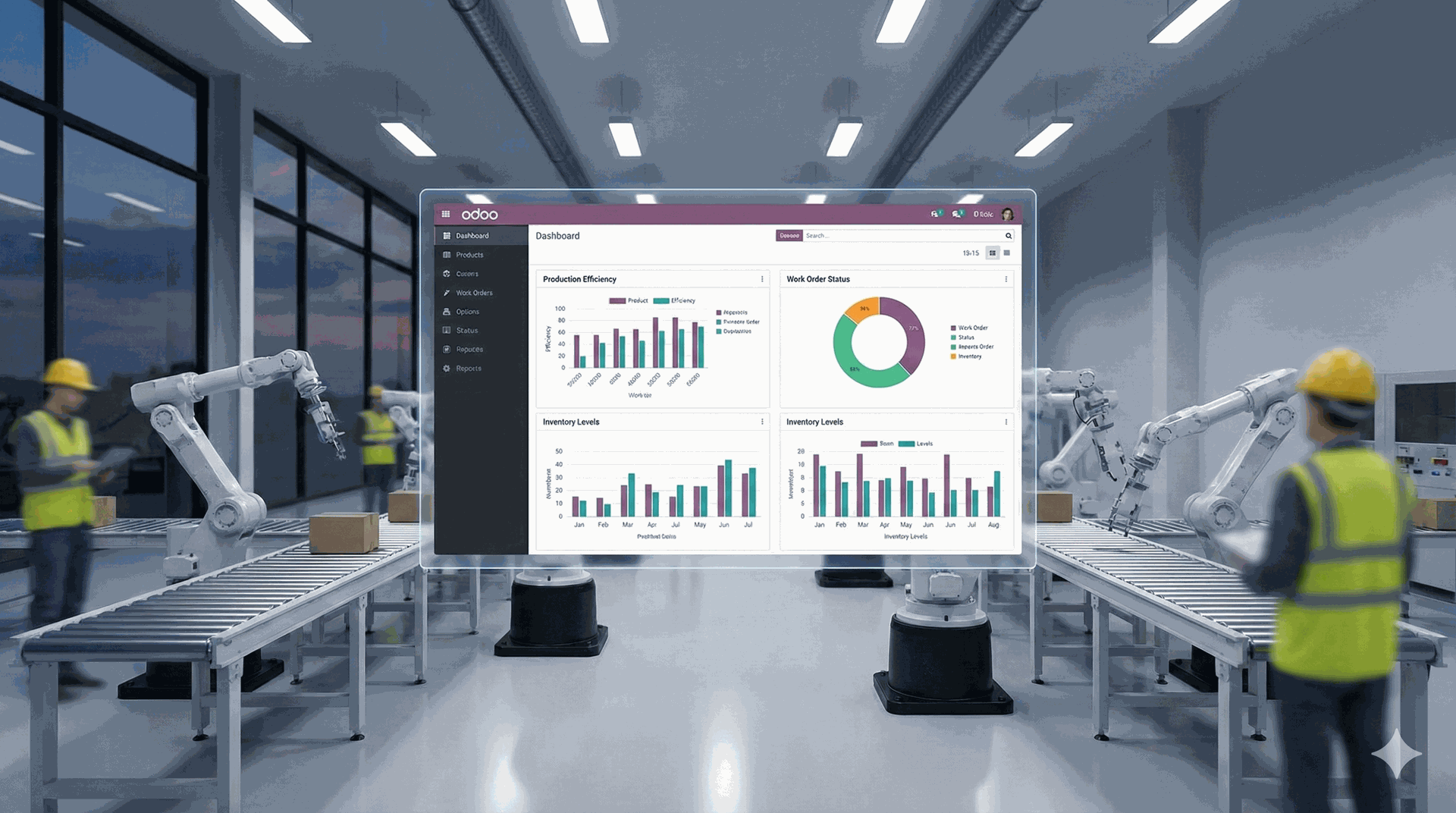
1. A Unified Truth with Odoo Modern platforms, such as Odoo ERP for Manufacturing, create a single source of truth. Whether it's the finance team looking at costs, the warehouse manager looking at stock, or the CEO looking at profit margins, everyone is looking at the same, real-time data. Odoo specifically excels in this area by offering a modular approach that grows with your factory.
2. The Importance of Professional Implementation However, simply buying software isn't enough. To truly benefit from these tools, companies need professional ERP Implementation Services. An expert implementation ensures that the software is configured to match your specific production workflows, rather than forcing your factory to adapt to the software.
3. Logistics Optimization Shipping finished goods is just as complex as making them. ERPs with logistics modules help optimize truck loads, plan delivery routes, and track shipments. This level of visibility improves customer satisfaction and drastically cuts logistics costs.
Conclusion
Digital transformation in the manufacturing industry is not a trend; it is the new standard. Whether it is through the predictive power of IoT, the customization potential of Digital Twins, or the unifying strength of a modern ERP system, technology is enabling manufacturers to do more with less.
The companies that succeed in the next decade will be those that view their operations not just as physical factories, but as integrated digital ecosystems. They will be faster, greener, and more responsive to their customers.
If your manufacturing business is still relying on manual spreadsheets and disconnected systems, it’s time to look at the future. The tools to reshape your business are ready are you?
FAQ
Q1. What is digital transformation in manufacturing?
Digital transformation in manufacturing refers to integrating digital technologies such as ERP, IoT, AI, and automation to improve production efficiency, visibility, and decision-making.
Q2. How does ERP support digital manufacturing?
ERP systems centralize data, automate workflows, improve inventory management, and enable real-time insights across manufacturing operations.
Q3. Is digital transformation suitable for small manufacturers?
Yes. Modern cloud-based ERP solutions make digital transformation affordable and scalable for small and mid-sized manufacturers.
Q4. What are the biggest benefits of digital transformation?
Improved productivity, reduced downtime, better quality control, supply chain transparency, and data-driven decision-making.
 Recent Posts



 Free Consultation