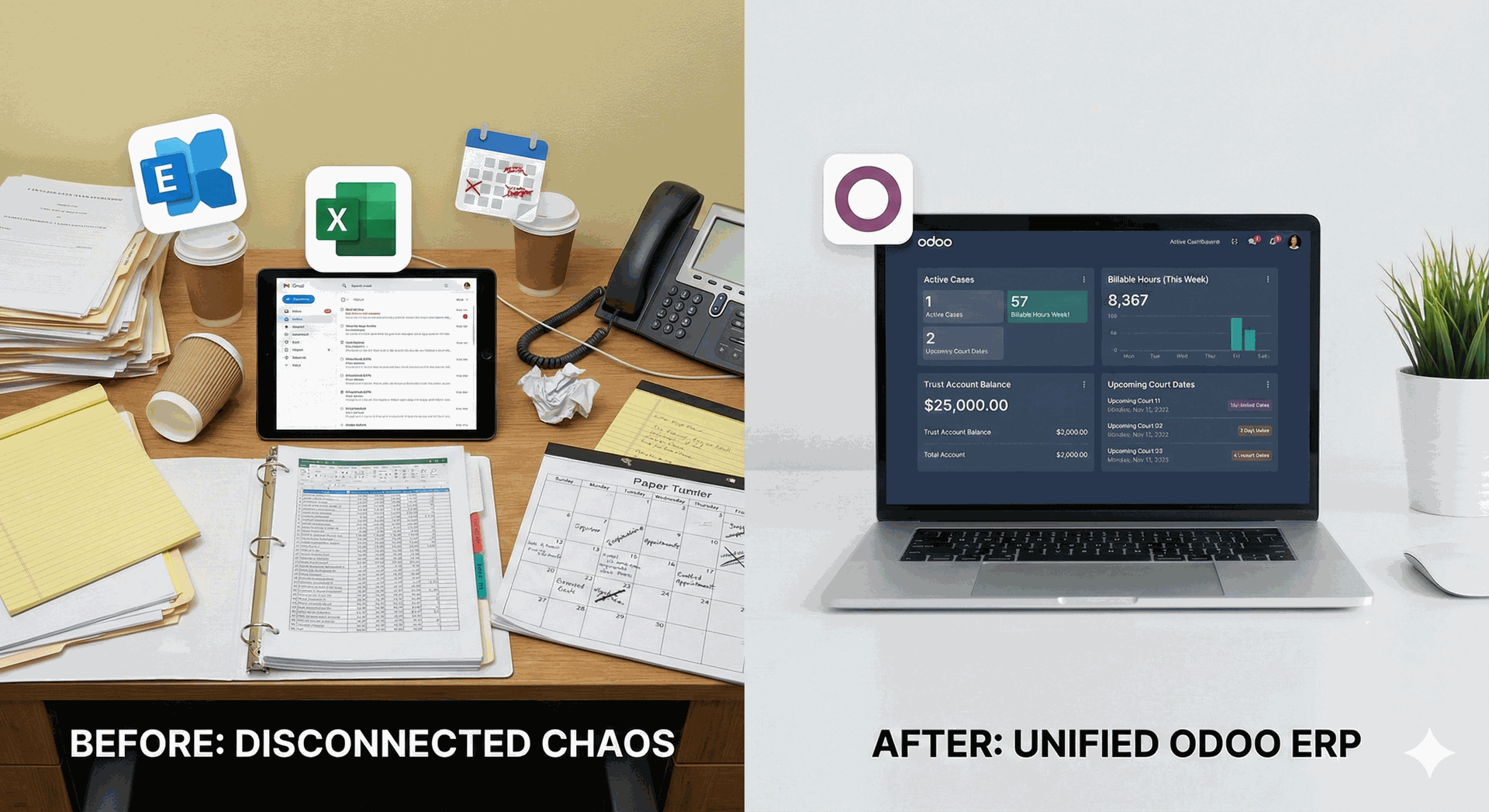
The legal profession is built on precision, deadlines, and the sanctity of the billable hour. Yet, surprisingly, many law firms still operate using a chaotic mix of disconnected tools: spreadsheets for time tracking, legacy software for billing, and a filing cabinet system for case management.
In an era where digital transformation is reshaping every industry, law firms cannot afford to be left behind. This is where Odoo ERP enters the courtroom. It’s not just business software; it is a comprehensive ecosystem that centralizes every aspect of a legal practice.
Below, we explore how Odoo is revolutionizing legal operations and why it might just be the best associate you ever hire.
Why Law Firms Need ERP Integration
Traditionally, law firms have relied on "best-of-breed" software one app for accounting, another for email, and a third for document storage. The problem? These systems rarely talk to each other. This creates data silos, leading to duplicated data entry, missed billable hours, and a fragmented view of the firm’s financial health.
An Enterprise Resource Planning (ERP) system like Odoo consolidates these functions into a single platform. For a law firm, this means that when a lawyer logs time on a case, the invoice is automatically prepared, the client file is updated, and the realization rate is calculated in real-time.
Top 7 Odoo ERP Modules That Empower Law Firms
Odoo is modular, meaning you can start with what you need and expand later. However, for a law firm to truly thrive, these seven modules form the essential core.
1. Odoo CRM: Client Relationship Management
In the legal world, CRM isn't just about sales; it’s about Client Intake and Conflict Checks. Before a case is even accepted, Odoo CRM allows firms to track inquiries, schedule initial consultations, and automate follow-ups.
More importantly, with the help of Odoo Customization Services, the CRM can be tailored to perform automatic conflict of interest checks against existing client databases, ensuring you remain compliant before onboarding a new matter.
2. Odoo Project: Case and Matter Management
Think of a "Project" as a "Case" or "Matter." This module allows partners to assign tasks to associates and paralegals, set strict deadlines for court filings, and visualize the progress of a trial.
- Kanban View: Move a case from "Discovery" to "Trial Prep" to "Settlement" with a drag-and-drop interface.
- Collaboration: Attach notes and updates directly to the case file so the entire legal team is always on the same page.
3. Odoo Documents: Legal Document Management
The sheer volume of paperwork in a law firm is staggering. Odoo Documents acts as a secure, digital repository. It allows for:
- OCR (Optical Character Recognition): Scanned PDF affidavits become searchable text.
- Version Control: Ensure no one is editing an outdated version of a contract.
- Secure Sharing: Share sensitive discovery documents with clients or opposing counsel via secure, time-limited links rather than risky email attachments.
4. Odoo Timesheets: Accurate Time Tracking
The billable hour is the currency of the legal profession, but "leakage" forgotten time is a major revenue killer. Odoo Timesheets integrates with the Project module. Lawyers can start a timer on their phone while in court or log time directly against a specific case number from their desktop.
Because it connects to the billing system, there is no manual data entry required to turn those hours into an invoice.

5. Odoo Accounting: Legal Billing and Trust Accounting
Legal accounting is unique due to the complexities of trust accounts (IOLTA) and retainers. Standard accounting software often struggles here, but Odoo shines.
- Trust Accounting: Manage client funds separately from operating funds, ensuring strict compliance with bar association rules.
- Automated Invoicing: Generate invoices based on timesheets and expenses (court fees, travel) with a single click.
- Multi-currency Support: Essential for firms practicing international law.
6. Odoo Helpdesk: Client Support and Communication
Clients expect instant responses. Odoo Helpdesk provides a portal where clients can submit questions or request status updates. Instead of playing phone tag, the query is ticketed and assigned to the relevant attorney. This improves client satisfaction and creates a transparent record of all communication.
7. Odoo HR: Managing Legal Teams
A firm is only as good as its talent. Odoo HR streamlines the recruitment of top-tier associates, manages complex partnership structures, and handles employee leave. It can also track Continuing Legal Education (CLE) credits to ensure all attorneys remain licensed and compliant.
How Odoo Keeps Legal Data Secure and Compliant
Security is the non-negotiable bedrock of the legal industry. A breach of attorney-client privilege can destroy a firm's reputation.
Odoo offers enterprise-grade security features, including end-to-end encryption and two-factor authentication (2FA). However, the real power lies in Access Rights. You can configure the system so that junior associates only see files relevant to their specific cases, while sensitive financial data is restricted to equity partners.
By working with an experienced Odoo partner, you can ensure your hosting strategy (whether on-premise or cloud) meets the strict data residency and privacy regulations of your jurisdiction.
Seamless Integrations: Building a Connected Legal Ecosystem
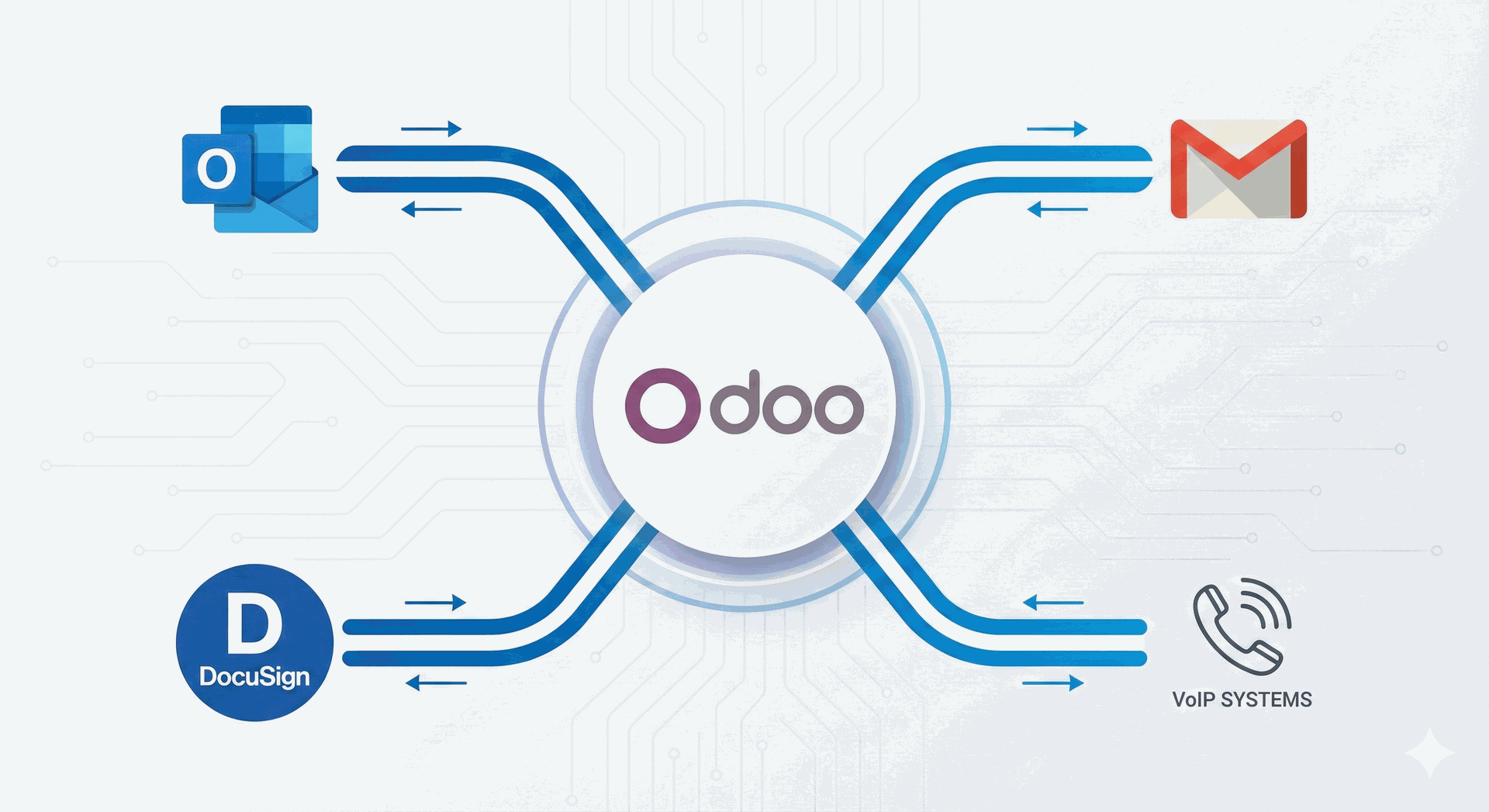
Lawyers live in their email and document editors. Odoo understands this. It doesn't force you to abandon the tools you love; it connects with them.
- Outlook/Gmail Integration: Turn an email from a client into a task or a lead without leaving your inbox.
- VoIP Integration: Automatically log call durations to the relevant client case for billing.
- eSignatures: Send retainer agreements and settlements for digital signature directly from the Odoo interface.
To achieve this level of connectivity, professional Odoo implementation services are recommended to handle the API connections and ensure data flows smoothly between systems.
Customizing Odoo to Fit Your Law Firm
No two law firms are identical. A Personal Injury firm operates differently than a Corporate IP practice. This is where the open-source nature of Odoo becomes a competitive advantage.
Unlike rigid legal software that forces you to change your processes, Odoo bends to your will.
- Custom Fields: Add fields for "Statute of Limitations" deadlines or "Patent Numbers."
- Automated Workflows: Create triggers that alert partners when a settlement offer exceeds a certain amount.
- Reporting: Build custom dashboards to track "Realization Rates" per attorney.
To get the most out of this flexibility, engaging in expert Odoo ERP consulting is vital. A consultant can translate your specific legal workflows into Odoo’s technical framework.
Conclusion
The legal industry is moving faster than ever. To stay competitive, law firms must minimize administrative overhead and maximize the time spent practicing law. Odoo ERP offers a unified, secure, and highly customizable solution that streamlines everything from case management to trust accounting.
Whether you are a boutique practice or a large firm, the transition to a modern ERP is an investment in your firm's future efficiency and profitability.

 Recent Posts




 Free Consultation